There is a reason you feel calmer stepping into a room that has a little greenery, a little texture, a little life to it. It is not coincidence — it is biology. Humans are hardwired to respond to natural forms, and that pull towards the organic world does not disappear simply because you live in a flat on the fourth floor of a city building.
This is exactly where biophilic design at home becomes so powerful, and so surprisingly accessible. You do not need to knock down walls or install a living plant wall to feel the effect. Sometimes all it takes is the right image on the right wall — and the science behind that idea is far more compelling than you might expect.
What Biophilic Design Actually Means (and Why It Matters for You)
Biophilia, a term popularised by the biologist E.O. Wilson, describes our innate need to connect with the natural world. Biophilic design takes that need and builds it into the spaces where we live and work. In practice, this can mean natural materials, abundant light, flowing water features — or, more simply, visual references to nature that the brain recognises and responds to with measurable calm.
Research from the fields of environmental psychology and neuroaesthetics consistently shows that exposure to natural imagery — plants, leaves, organic patterns — lowers cortisol levels, slows the heart rate, and improves focus. Your nervous system does not always distinguish sharply between standing in a real forest and looking at a richly detailed botanical print on a pale wall. The response, while not identical, travels along the same neurological pathways. That is a remarkable thing to sit with.
How a Botanical Print Changes the Feeling of a Room
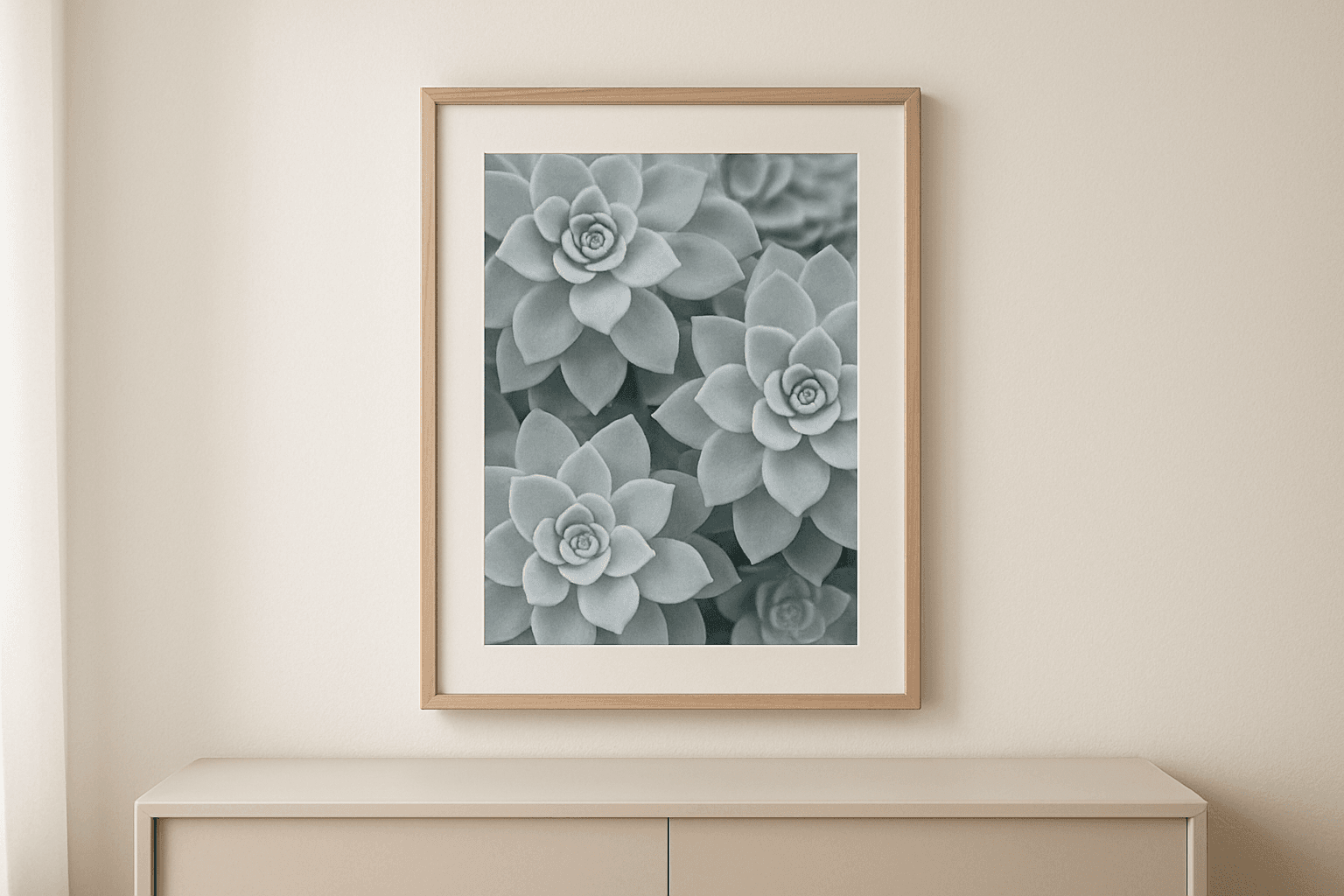
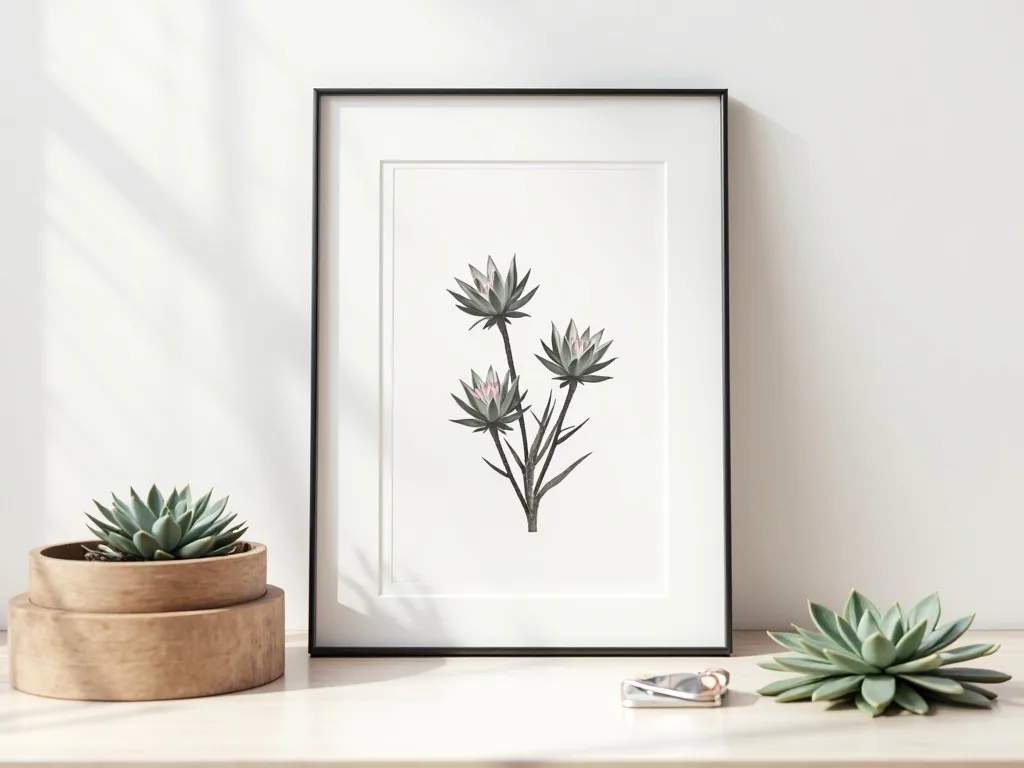
A botanical print works on the room in layers. The first is purely visual: organic shapes, irregular edges, and the subtle gradation of colour that appears in nature all signal complexity without chaos — exactly the kind of sensory input that the human brain finds restorative rather than exhausting. A Sempervivum succulent, with its tight geometric rosette and its surprising range of greens, purples, and dusty pinks, delivers that complexity in a single image.
The second layer is psychological. Choosing to surround yourself with imagery that references growth, quiet persistence, and natural cycles sends a subtle cue to your own mind about how you want to inhabit your space. Walls are not neutral. They communicate something — and a well-chosen botanical print communicates patience, beauty, and a kind of rooted stillness that is the opposite of the scrolling, flickering digital noise most of us absorb all day.
The third layer is aesthetic. A botanical print anchors a room in a way that trend-driven decorative choices rarely do. It belongs to a visual tradition stretching back centuries, from the hand-rendered plates of Victorian naturalists to the studio-designed artwork available today. That continuity gives a space a quiet authority.
Wall Art for Living Room Spaces: Placement and Scale
Where you hang your botanical wall art matters as much as which piece you choose. In a living room, the wall behind a sofa is the most considered location — it becomes part of the composition of the entire seating area, present in the background of every conversation and every quiet evening in. Aim for artwork that fills roughly two-thirds of the sofa's width for balanced proportion.
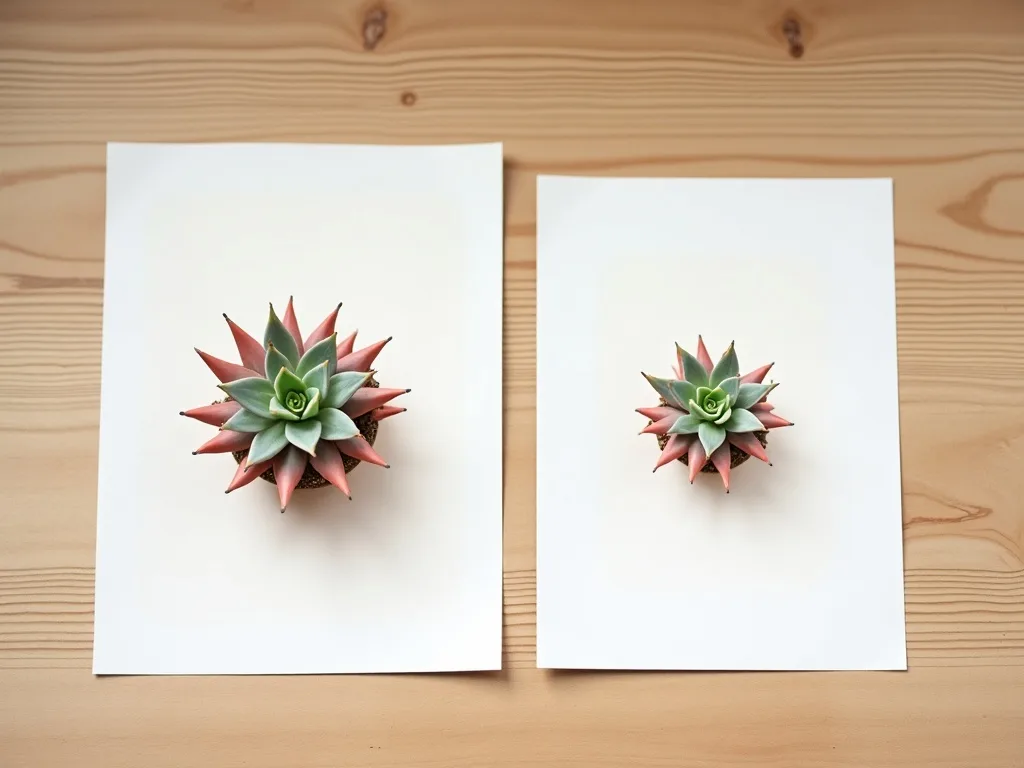
For scale, a single large-format piece — printed at 50 × 70 cm or 70 × 100 cm — makes a confident statement and anchors the room immediately. If you prefer a more curated, gallery-style feel, a grouping of three coordinated botanical prints in smaller formats (such as 30 × 40 cm each) arranged with even spacing creates visual rhythm without overwhelming the wall. Because Flora Digital's artwork is delivered as high-resolution digital files, you choose your printer and your size, which means you control the scale precisely to suit your own walls.
Building Calm Into Your Home, One Wall at a Time
Biophilic design at home does not have to be a renovation project. It can be as immediate as deciding what you look at every morning when you walk into your kitchen, or what is on the wall across from your desk. The accumulation of small, considered choices — a botanical print here, a natural texture there — compounds into a home that genuinely feels different to be inside.
Succulents, and Sempervivum varieties in particular, carry an extra layer of symbolic resonance that suits this approach well. Their name translates roughly as "always living" — a plant that endures, that holds its form through difficult seasons, that asks for very little and gives back a great deal of quiet beauty. That feels like exactly the kind of energy worth bringing onto a wall.
The good news is that accessing this effect has never been simpler. A high-resolution file, downloaded in minutes, ready to take to a local print shop or send to an online printing service — biophilic design at home, at your own pace and entirely on your own terms.
If you are ready to see what a well-chosen botanical print can do to a room, browse the full studio collection and find the piece that belongs on your wall: Explore the botanical wall art collection.